
Since April, India has seen multiple strains of the coronanavirus sweep the nation, upending life and businesses alike. Out-of-home retail and discretionary categories such as durables, auto, fashion, lifestyle, hospitality, food services, travel, and tourism have been the worst-hit as Covid cases remain high, leaving state governments with no option but to curtail mobility and economic activity.

Close to 60 per cent models that Kia sells in India are top trims of the models. In line with its global strategy, the India arm of South Korean major Kia has dropped 'Motors' from its name. This is to reflect the transition from an automaker to a provider of advanced and eco-friendly mobility solutions, the company said. With a new brand identity and slogan, the fourth-largest car maker in India by sales aims to accelerate growth and strengthen its premium positioning.

Durable goods companies and retailers say online sales won't compensate for the fall in offline sales.

GM cites global pandemic as reason for the step. Firm had stopped selling cars in India in 2017 and stopped production completely on December 24, 2020.

On Day One of the lockdown announced by the Maharashtra Government, it wasn't business as usual for automobile manufacturing units in the State. Confusion prevailed over regulations-what is allowed and what isn't. While some units ran with less than half the workforce, others sought clarity from the government on what is permissible and what isn't.

While domestic market growth is important, the sales trajectory in the international markets, which account for 45 per cent of the revenues, will be a key rerating trigger, say analysts.

The five-year (2015-16 to 2020-21, or FY21) compound annual growth rate (CAGR) of the overall auto industry is now negative at 2 per cent, against 5.7-per cent growth it saw in the previous five years (from 2010-11 to 2015-16).

Near-term prospects hinge on the progress of the second wave of Covid-19. A lockdown will dent prospects as 60 per cent of revenues come from the dine-in segment.

The gains came on expectations that the company will post strong growth given its presence in application to peer services and the fast-growing communication platform as a service segment.

The lockdown in Maharashtra will have a catastrophic impact on April sales, as dealers will not be able to realise the potential of festivities like Ugadi, Gudi Padwa, Baisakhi and Poila Boishakh.
Given the expectations of growth in the packaged foods segment, the company seeks to become a Rs 1-trillion FMCG business by FY30.

Check out some of the stocks that will react on the basis of their numbers in the near term.

'I see a virtually zero impact on the sales of new vehicles with this move,' said an expert

India Inc's cash pile was up 13.8 per cent last fiscal year, thanks to a combination of higher profits in sectors such as IT and fund raising by top companies such a Reliance Industries, Bharti Airtel and Tata Motors, among others.

When Anand Mahindra becomes non-executive chairman in November, Shah will become the first professional MD and CEO in the history of the Mahindra group to have a complete oversight of and responsibility for the Mahindra group businesses.

Holidayers, including those who would head overseas between April and June, are set to escape to the hills, beaches, and resorts in the country. This is to fend off the heat and beat the pandemic blues, indicates the initial bookings and online search trends.
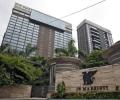
Marriott International is looking to make deeper inroads into leisure destinations as it seeks to make the most of domestic travellers' pent-up demand, said the company's top official. The world's largest hotel operator will add seven new properties in India in 2021, five of which will be in leisure locations - two in Goa, and one each in Mahabaleshwar, Thiruvananthapuram, and Dehradun.

Bajaj Auto has amended its dividend distribution policy as it seeks to reward its shareholders and boost return ratios. The amended policy will also consider the surplus the company has when calculating the dividend payout as a percentage of profits after tax, the Pune-based firm said in a stock exchange filing on Thursday.

Recently, Suzuki Motor Corp (SMC) in an investor presentation expressed strong intent to enter the electric vehicle (EV) space. This is part of a larger strategy the Hamamatsu-based firm has drawn up in developing electrification of technologies as it seeks to achieve carbon neutrality. The significance of this presentation is that it marked the first time that the Japanese carmaker spelt out its EV strategy with well-defined timelines. SMC plans to develop electrification technologies by 2025, fully implement them in products from the same year, and make a full-scale quantitative increase from 2030.

The local arm of the Japanese two-wheeler manufacturer accounts for every second scooter sold in India.
 © 2026 Rediff.com - Investor Information - Advertise with us - Disclaimer - Privacy Policy - Sitemap - Feedback - About us - Terms of use - Grievances